Chemical Peel Aftercare: What to Expect Day by Day
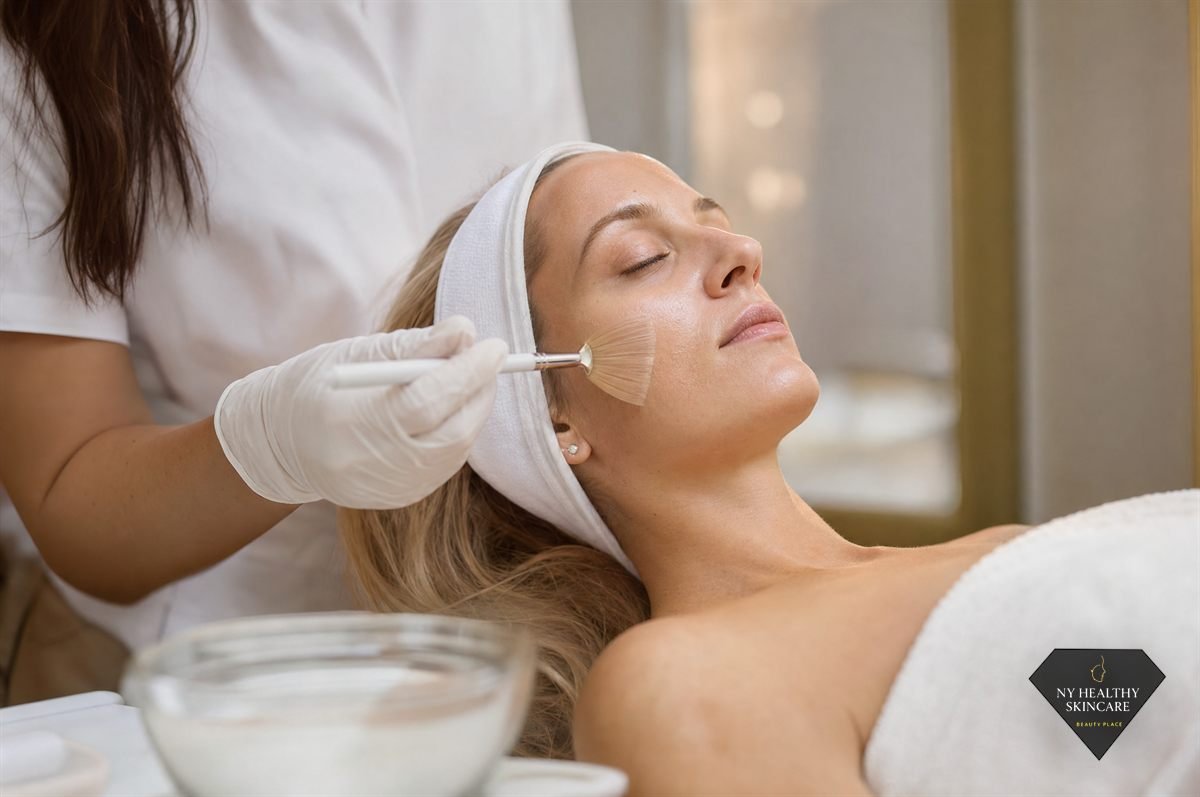
Chemical peel aftercare means one week of a gentle cleanser, a plain moisturizer, daily sunscreen and no picking, while the flaking peaks on days 3 to 5. New skin shows by day 6 or 7, brighter and more even. Retinoids and exfoliating acids stay paused for that first week.
Our chemical peel in Midtown Manhattan takes 30 minutes and costs $150 at 252 West 38th Street, between 7th and 8th Avenue. We analyze your skin first and choose the formulation and strength from what we see.
Your peel week at a glance
- Day 1: slight redness and tightness, like a mild sunburn.
- Days 2–3: skin feels dry, and light flaking may begin.
- Days 3–5: peak flaking; let it shed on its own.
- Days 6–7: new skin is visible.
- 1 week: pause retinoids and acids, and wear sunscreen every morning.
Chemical peel aftercare in the first 24 hours
In the first 24 hours after a chemical peel, expect slight redness and tightness that feels like a mild sunburn, and keep the routine to a gentle wash and a plain moisturizer. If day 1 feels very different from that, let us know at (917) 402-5448.
What to do on the first night
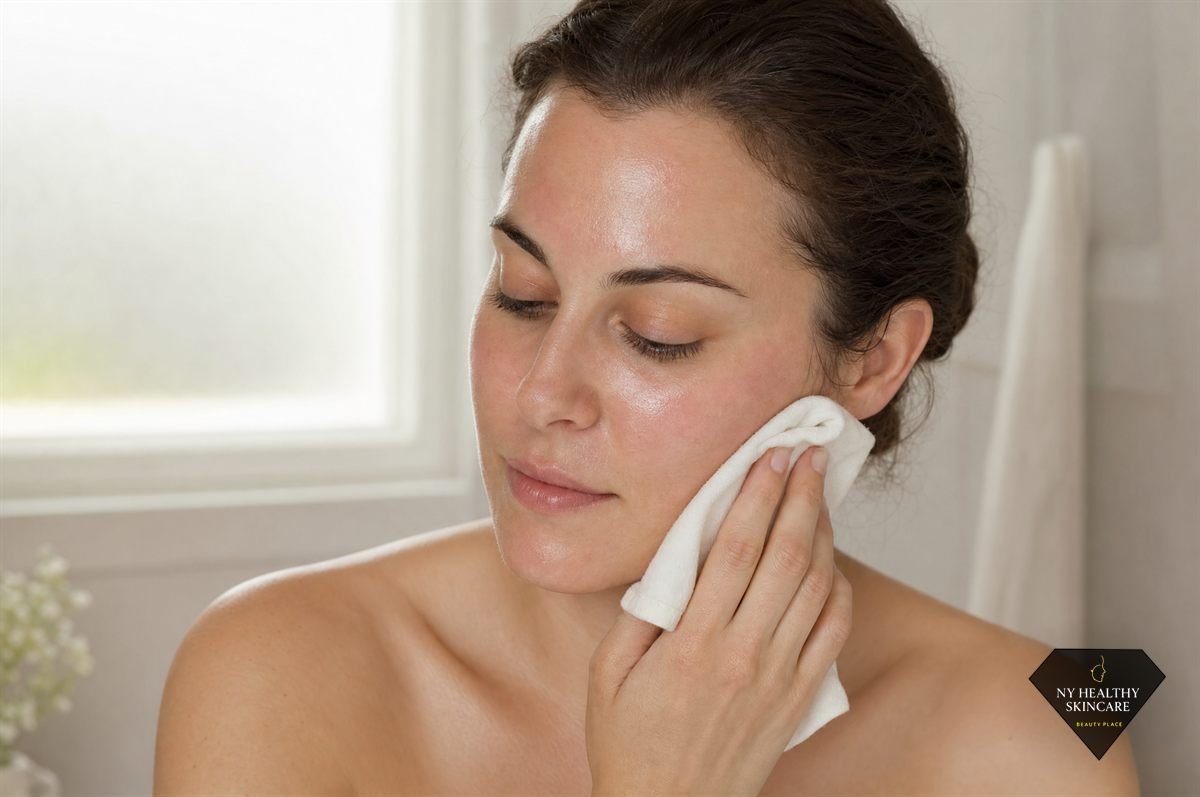
That evening, wash with lukewarm water and a gentle fragrance-free cleanser, using your fingertips and light pressure. Rinse by cupping water in your hands, which is gentler than the shower spray, and pat dry with a clean towel so nothing drags at skin that is getting ready to flake. Smooth on a plain moisturizer while the skin is still a little damp, and add another layer if it feels tight before bed. The next morning, repeat the cleanser and moisturizer and finish with a broad-spectrum sunscreen, even if you're only walking a few blocks to the subway.
What to skip while your skin heals
- Retinoids and exfoliating acids
- Scrubs, cleansing brushes and washcloths
- Hot showers, saunas, steam rooms and workouts that leave you sweating; ask us when you can go back to them
- Picking or rubbing any patch that feels rough
The chemical peel process, day by day
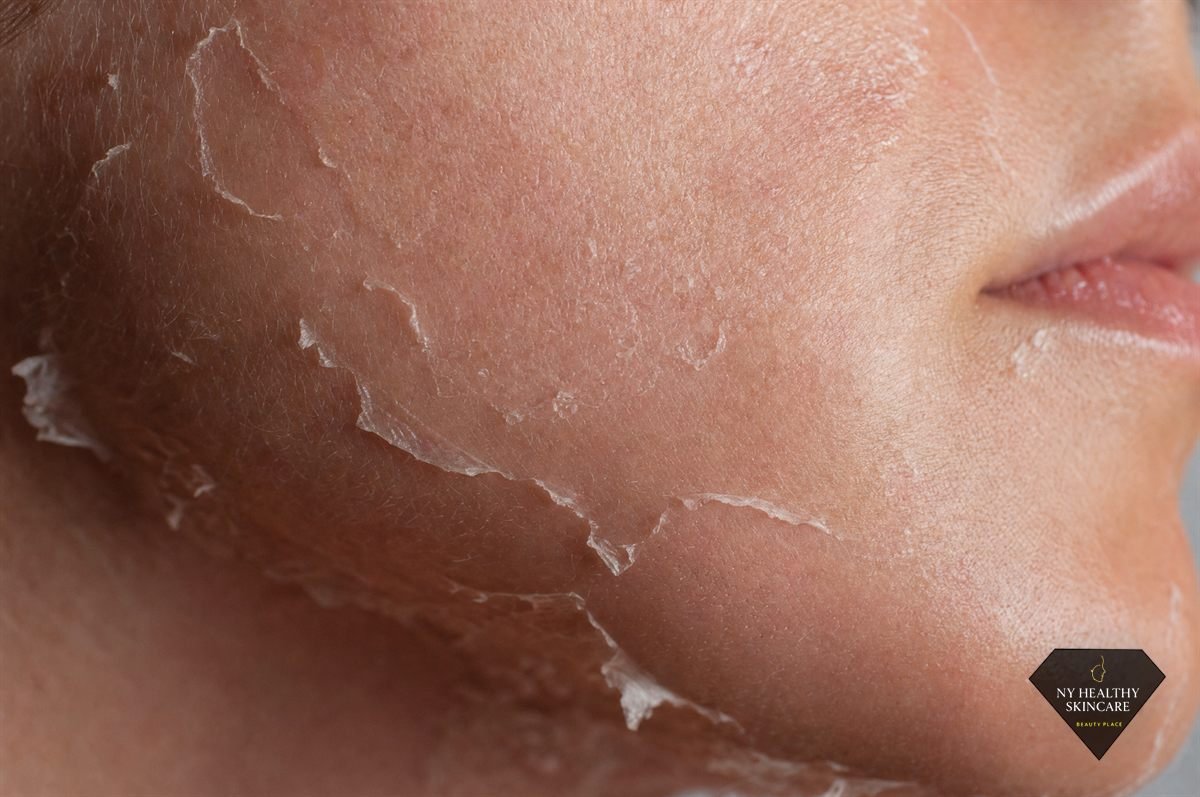
The chemical peel process takes one week: tightness on day 1, dryness on days 2 and 3, peak flaking on days 3 to 5 and new skin by day 6 or 7. The exact days shift a little with the depth we choose for your skin.
| Day | What you'll see and feel | What to do |
|---|---|---|
| Day 1 | Slight redness and tightness | Gentle cleanser and plain moisturizer |
| Days 2–3 | Skin feels dry; light flaking may begin | Moisturize more often, with sunscreen every morning |
| Days 3–5 | Peak flaking | Let the skin shed on its own; never pull it |
| Days 6–7 | New skin visible, brighter and more even | Same routine, with sunscreen every morning |
| After day 7 | New skin that burns and re-pigments easily | Bring retinoids and acids back, one product at a time |
Left alone, skin renews its outer layer in a cycle that typically lasts around 26 to 28 days, according to a review of skin keratinization in the International Journal of Molecular Sciences. A peel uses a controlled acid solution to speed that turnover up, and the flaking you see during the week is the top layer coming away.
From day 2 to day 5, keep the day-1 routine exactly as it is. Each morning, wash with your gentle cleanser and lukewarm water, then finish with moisturizer and sunscreen before you leave home. Carry the moisturizer in a bag or a desk drawer and reapply whenever your skin feels tight. At night, wash again and use a slightly thicker layer of the same plain cream so lifting edges stay soft overnight. Don't start anything new this week, including samples you haven't tried before.
How long does a chemical peel take to heal?
A chemical peel from our menu takes about 1 week to heal, and a deeper peel takes longer. Peels are grouped as superficial, medium or deep by how far the acid reaches, according to the StatPearls chapter on chemical peels for skin resurfacing.
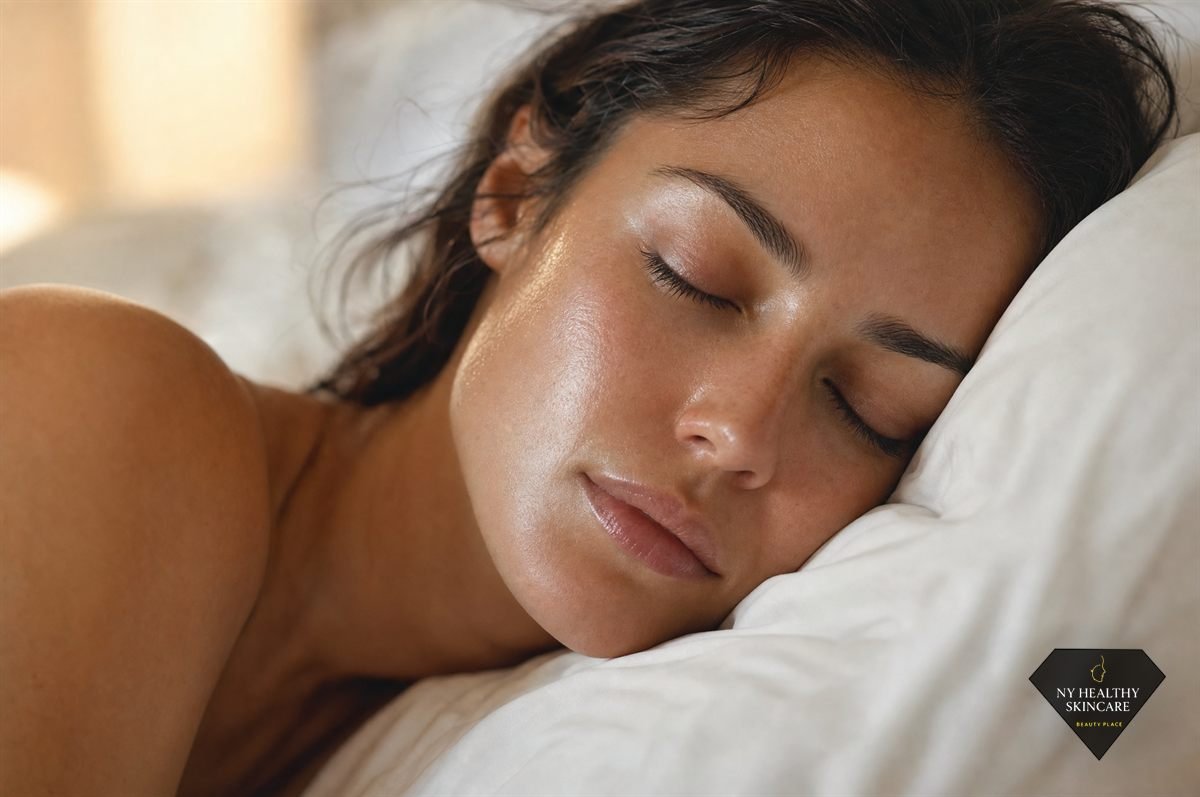
Medium-depth and deep peels aren't on our menu; on it, our peel sits beside three surface treatments with no downtime.
| Treatment | Time | Price | How it works | Downtime |
|---|---|---|---|---|
| Chemical Peel | 30 min | $150 | Acid solution that reaches deeper than the surface | Flaking peaks on days 3–5; new skin by day 6–7 |
| Microdermabrasion | 30 min | $100 | Mechanical abrasion of the surface | None; skin is more sensitive to UV for about a week |
| Dermaplaning | 45 min | $120 | Sterile blade that removes dead skin and peach fuzz | None |
| Hydradermabrasion | 45 min | $190 | Suction with serum infusion | None; slightly flushed for a few minutes |
Our peel is the most effective option on our menu for hyperpigmentation, melasma, sun damage, post-acne marks and fine lines, and the only one of the four with a flaking week. If texture is the concern and your calendar is tight, microdermabrasion in Manhattan works on the surface with no downtime, and the two are often alternated.
Which products can you use after a chemical peel?
For the first week after a chemical peel, use a gentle cleanser, a plain moisturizer and a broad-spectrum sunscreen, and nothing else. We hold peel week to those three so nothing irritates the skin barrier while it rebuilds.
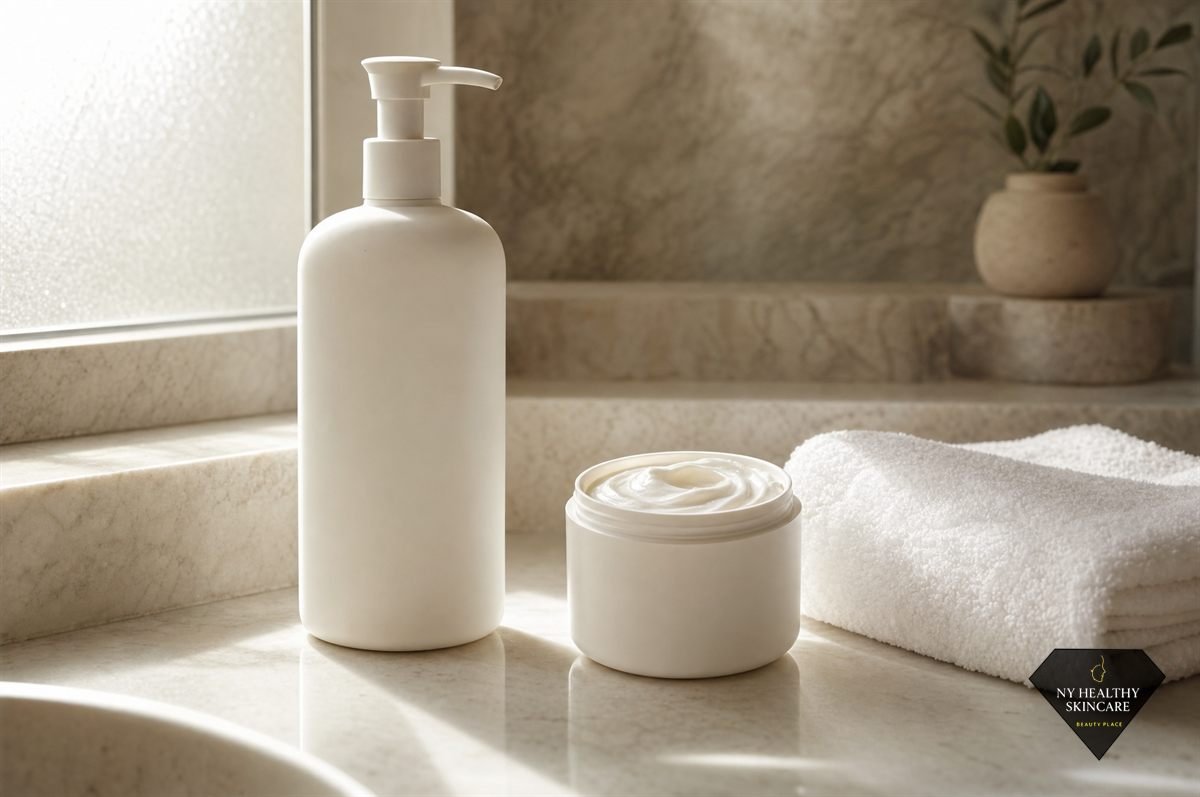
Gentle means a fragrance-free cleanser without scrubbing particles or acids, and plain means a fragrance-free moisturizer without retinol or acids.
When to restart retinol and acids
After day 7, bring retinoids and exfoliating acids back one at a time, a few days apart, so that if something stings you know which product caused it. The pause covers retinol and retinal creams and serums, and glycolic, lactic, mandelic and salicylic acids, including toners and pads that contain them. Scrubs and cleansing brushes wait the same week.
For a prescription retinoid such as tretinoin, ask the doctor who prescribed it before you stop or restart it. If you also use benzoyl peroxide or a vitamin C serum, mention it at your appointment, and we'll tell you when to bring it back and when to stop your actives before the next peel. To see where the peel sits among the rest of our treatments, compare facials in NYC by concern and price.
Sun protection and self-tanner after a chemical peel
After a chemical peel, wear a broad-spectrum sunscreen every morning, starting the next day and keeping it up after week 1, because the new skin burns and re-pigments easily.
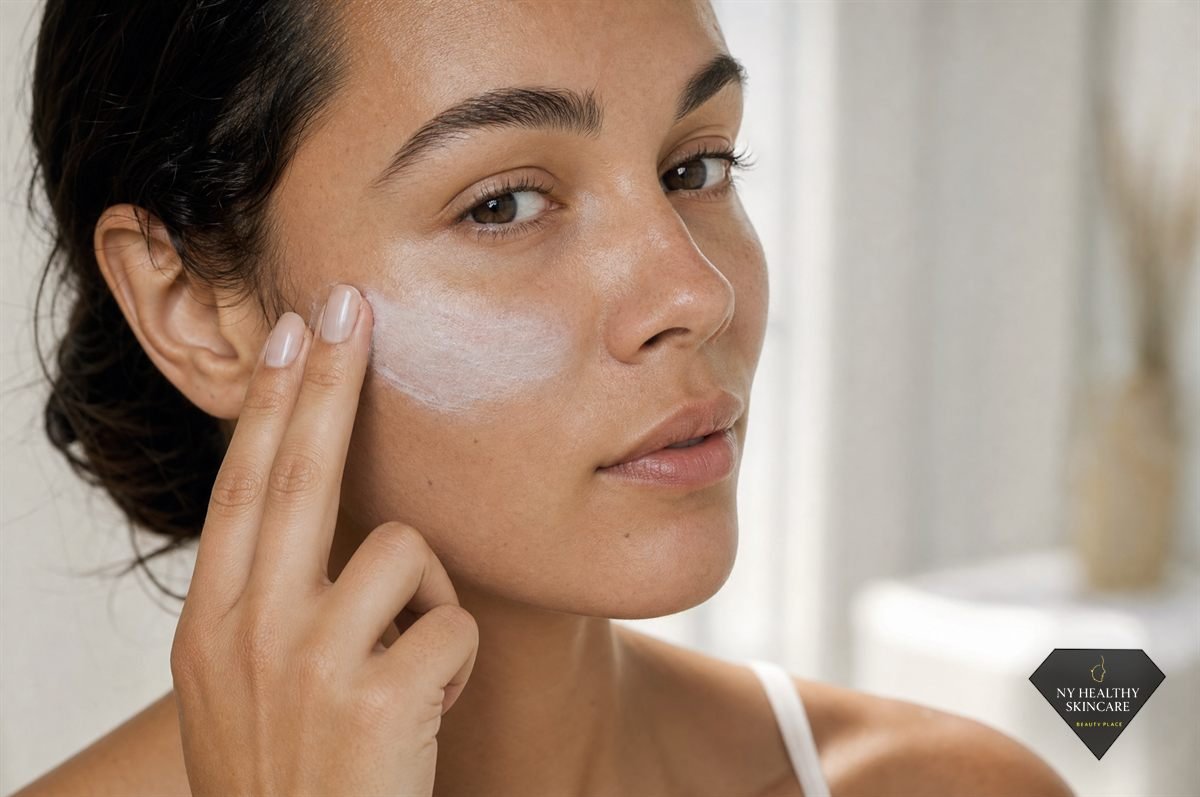
Choose a broad-spectrum formula; StatPearls' review of sunscreens and photoprotection describes broad-spectrum products as covering both UVA and UVB light. Make it the last step of your morning routine, on cloudy days too. Before a long stretch outdoors, put on a fresh layer. When we treat pigmentation with a series of peels, wear SPF every day between sessions; without it, the pigmentation returns. Skip tanning beds while the skin is new.
What self-tanner is safe to use after a chemical peel?
No self-tanner is a safe choice while your skin is still flaking, whichever formula you pick: lotion, mousse, drops or a spray tan. Self-tanner colors the outermost layer of skin, and during peel week that layer is coming off unevenly, so the color clings to dry patches and sheds with each flake. Ask us how long to wait after your peel; at the very least, wait until the flaking has stopped completely and your plain moisturizer no longer stings. Then test the tanner on a small patch along the jaw before your whole face. A bottle tan adds color without sun protection, so keep wearing sunscreen over it.
Normal peeling vs. warning signs
Normal peeling after a chemical peel is dry, light flaking during the first week that eases as new skin shows through. Anything on the list below falls outside that pattern.
- Blisters, or open patches that ooze or weep
- Yellow crusts, pus or a fever
- Burning or pain that gets worse instead of easing
- Redness that spreads or deepens after the first few days
- Swelling that keeps building, especially around the eyes
- A cold sore on or near the treated area
If you notice any of these, see a doctor or dermatologist the same day, and let us know at (917) 402-5448; if your peel was done somewhere else, call that office too. The doctor decides whether you need medication. If you get cold sores, tell us before your next peel.
If you take isotretinoin or another prescription medication for your skin, tell us when you book. The doctor who prescribed it decides when a peel, extractions or other exfoliating treatments are safe for you again.
What picking does to new skin
Pulling flaking skin before it is ready can leave a dark mark. When a flake lifts at the edge, the part still attached is holding on to skin underneath that isn't ready to let go. Smooth a little moisturizer over it and let it come away on its own during your evening cleanse. If one catches on a scarf or a pillowcase, trim it close with small, clean scissors and stop there.
Chemical peels on medium and deep skin tones
A chemical peel is safe for medium and deep skin tones when the acid and strength are chosen correctly, so we analyze your skin before choosing the formula for your 30-minute peel. Deeper peels carry a higher risk of post-inflammatory hyperpigmentation on these skin tones.
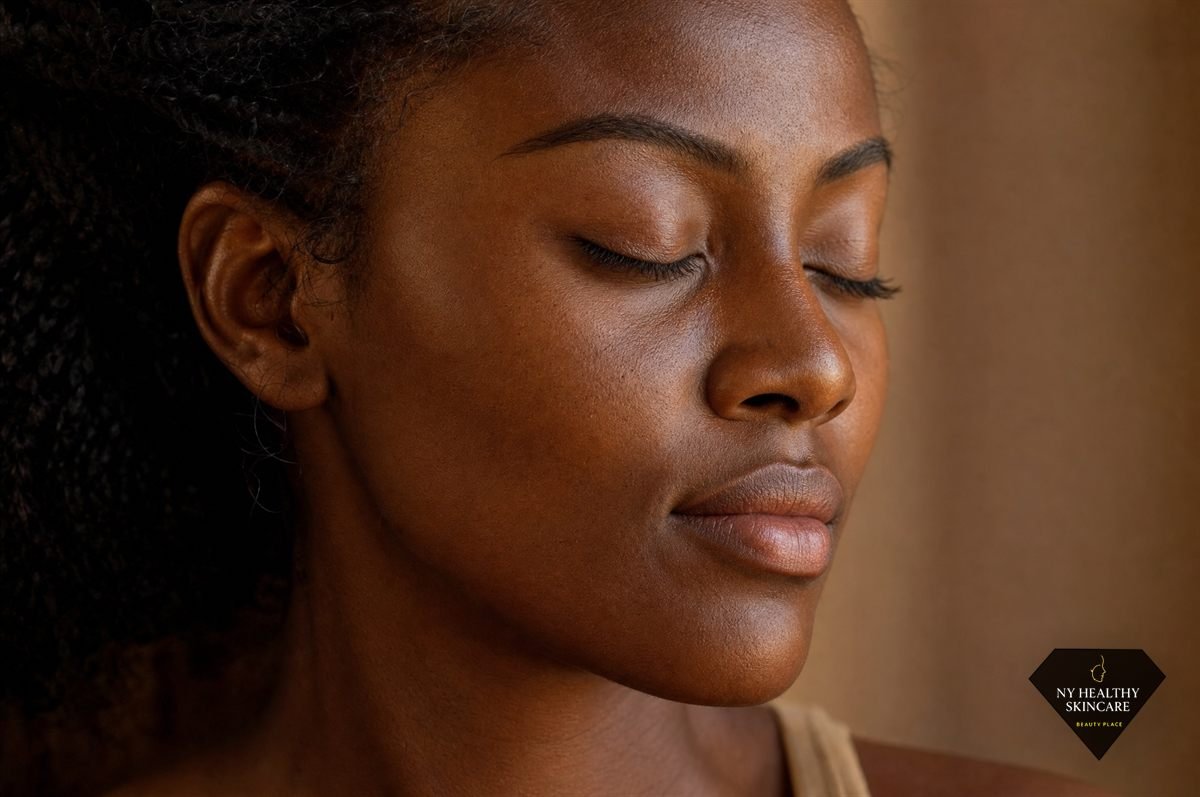
That darkening follows skin inflammation or injury, and it is more common and more severe in darker skin tones. Fresh skin also re-pigments easily in the sun, so on medium and deep skin tones, keep your hands off the flakes and wear sunscreen every morning after the peel.
If your peel was done somewhere else
If another studio or a dermatologist did your peel, follow that office's aftercare sheet, especially after a medium-depth or deep peel. Deeper peels heal over a longer stretch and can come with instructions or medication we don't give.
Chemical peels in New York: choosing the right weeks
The right week for a chemical peel in New York is one with no wedding, photo shoot or big presentation in the 2 weeks that follow and no long days outdoors while you flake. For an event, schedule the peel 2 to 3 weeks before and never within 2 weeks; closer to the date, book no-downtime hydradermabrasion 2 to 5 days before.
We're open until 7:30 pm on weekdays and until 5:30 pm on Saturdays. Counting the day of the peel as day 1, a late Friday appointment puts the dry days 2 and 3 on Saturday and Sunday, and the peak flaking of days 3 to 5 runs from Sunday into Tuesday. If Monday or Tuesday brings a client meeting or time on camera, postpone the peel until after it, since makeup won't cover peak flaking.
Keep the sunscreen through the cold months: the walk from Penn Station, or across Bryant Park at lunch, puts sun on fresh skin in December too.
A series for pigmentation is 3 to 6 peels spaced 3 to 4 weeks apart. A series of 3 runs 6 to 8 weeks from the first appointment to the last, and a series of 6 runs 15 to 20 weeks, so count backward from any event until the last peel lands 2 to 3 weeks before it. Between series, our base routine is a monthly European Facial; how often to book facials around a peel series covers that rhythm.
Frequently asked questions
When can I wear makeup again after a chemical peel?
Makeup works against you on the peak flaking days 3 to 5, when foundation clings to the flakes, and the right day to start again depends on the strength of your peel. When you do wear it, apply a light layer with clean fingers and take it off at night with your gentle cleanser.
Can I combine dermaplaning with a chemical peel?
Yes, and it's the pairing we rate highest on our menu: dermaplaning before a peel clears peach fuzz and the top layer of dead skin, so the acid reaches the skin evenly. Dermaplaning isn't right for active inflamed or cystic acne, an active cold sore or a recent sunburn.
Can I wax after a chemical peel?
Not on the peeled area while it is flaking or tender. Wax grips the surface of the skin as well as the hair, and during peel week that surface is the layer coming off. Waxing your legs or underarms isn't affected by a facial peel. For facial waxing, from brows to chin, give us your peel date and we'll tell you how long to wait; once you're cleared, our guide to waxing aftercare and ingrown hairs covers the days that follow.
Can I get extractions or a facial after a peel?
Not during the flaking week, since steam and extractions work on the same skin that is shedding. The gap depends on the strength of the peel. If blackheads are your main concern, read what happens in a deep pore cleansing facial with extractions, which at our studio is the 60-minute European Facial.
Why is my skin barely peeling after a chemical peel?
How much you flake depends on the strength we chose and on your skin, and a lighter peel can leave very little to see. One peel brightens the skin; changing the tone takes a series of 3 to 6. The new skin still burns and re-pigments easily, so the sunscreen and the one-week pause on retinoids and acids stay the same.
Sources
- Chemical Peels for Skin Resurfacing, StatPearls (NCBI Bookshelf)
- Key Factors in the Complex and Coordinated Network of Skin Keratinization: Their Significance and Involvement in Common Skin Conditions, International Journal of Molecular Sciences (PMC)
- Sunscreens and Photoprotection, StatPearls (NCBI Bookshelf)
- Postinflammatory Hyperpigmentation, StatPearls (NCBI Bookshelf)
Book a chemical peel in Midtown Manhattan
Our 30-minute peel is $150, and it pairs with dermaplaning when you want the acid to reach the skin evenly. Send us the date of any event you're planning around, and we'll keep the flaking week well clear of it.
| Service | Time | Price |
|---|---|---|
| Chemical Peel | 30 min | $150 |
| European Facial | 60 min | $150 |
| Microdermabrasion | 30 min | $100 |
| Dermaplaning | 45 min | $120 |
252 West 38th Street, Suite 404, between 7th and 8th Avenue · Call or text (917) 402-5448 · Rated 4.9 on Google